
A Journey Through Pride, Pain and the Unfinished Promise of ‘27 Down’
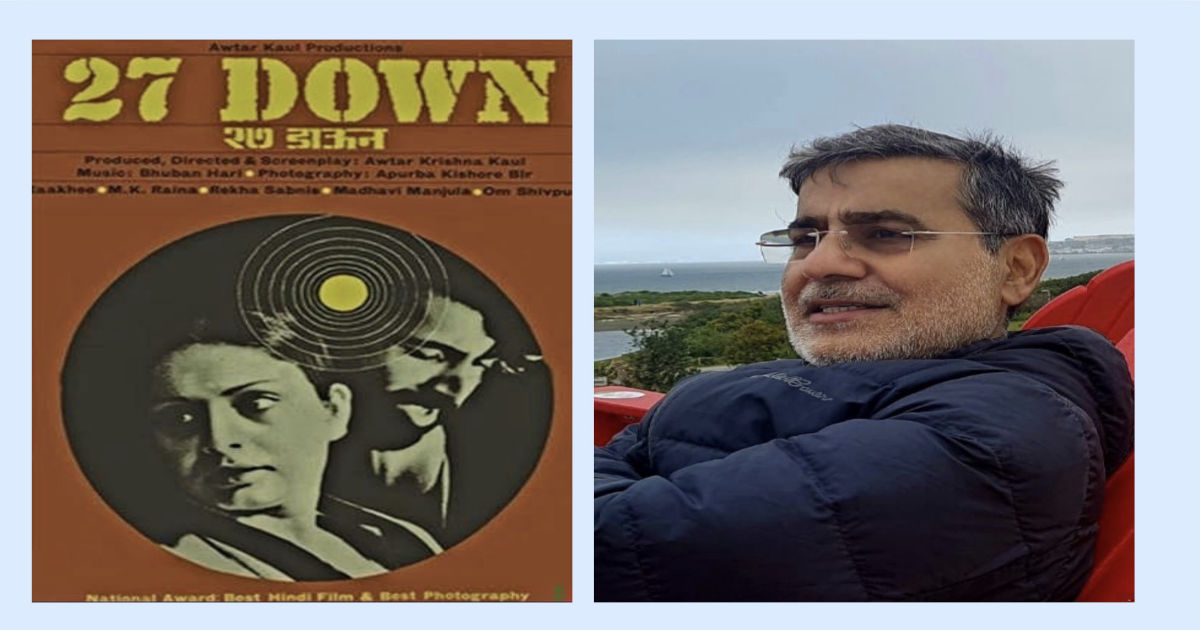
Before the world knew the brilliance of 27 Down, before critics called it a cult classic, before filmmakers whispered Awtar Kaul’s name with reverence — he was simply “Uncle Awtar” to a young Vinod Kaul. Vinod chose to give this interview to The Think Pot (TTP) to protect that memory, to honour a legacy frozen in time when Awtar died at 35—just as 27 Down earned two National Awards and the world finally recognised his genius. This EXCLUSIVE conversation between Vinod Kaul, Former Executive Director, Rajya Sabha TV and TTP Founding Editor, Mahima Sharma is his way of stitching pride and grief together. And we at TTP are ensuring one extraordinary filmmaker is never forgotten. At Visionary Voices we bring alive the silence of Awtar Kaul through his Nephew, Vinod Kaul.
Your uncle, Awtar Krishna Kaul, created 27 Down–a film that won two National Awards but tragically was his only work. How do you feel about his legacy in Indian cinema?
Vinod Kaul: Reflecting on Awtar Kaul’s legacy brings a mix of pride and pain. Our family holds his memory close. We remember the warmth of a devoted family man. And we celebrate the brilliance of the filmmaker he was. I feel deeply proud of my uncle and his timeless film, 27 Down. Even today, it moves filmmakers. It inspires cine lovers. It stands as a quiet benchmark of honest, powerful cinema. Its influence is still alive.
Indian cinema became richer because of him. One film. His first and his last. Yet it was enough to leave a mark that time cannot erase. It placed him firmly among the pioneers of India’s new wave cinema. But there is sadness too. His journey ended too soon. Just when the world was beginning to see the extraordinary director he truly was. To me, he will always be a film director with rare depth — his craft, his vision, his emotion. A blend that is impossible to forget.
Had he lived longer, Indian and world cinema would have been gifted with even more impactful, memorable works. In brief, a legacy cut short, yet still profoundly influential.
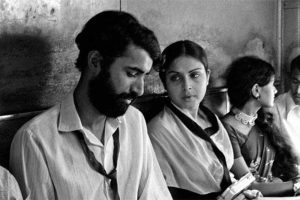
Vinod Kaul: See, 27 Down is not just a film. It is a quiet storm. A deep breath of truth in an age when loud Bollywood cinema ruled the theatres. And yet, this one film—small, honest, fearless—rose above all noise. Even fifty years later, 27 Down still holds its ground. It stands firm as a classic of Indian parallel cinema, far beyond nostalgia or old memories of black-and-white frames. Those local train compartments. Those crowded platforms. Those steam engines slicing through the 70s night. The film feels alive even today.
Its power comes from Awtar Kaul’s rare clarity. His craft is pure, storytelling is gentle but sharp and his gaze on human relationships is truthful. No forced tears. No cheap drama. Only real emotions. And that still speaks to the youth of today, struggling with the same questions of love, identity, and loneliness.
Avijit Ghosh, Senior Journalist, Times of India, and author of 40 Retakes: Bollywood Classics You May Have Missed, aptly describes 27 Down– “Why it makes the cult: Because it explores urban alienation just like French writer Albert Camus did in his novels; something no Hindi film had done before. Because cinematographer AK Bir’s camera travels inside the mind of the protagonist”.
Awtar Kaul was a class IV employee, yet his film garnered critical acclaim. How do you think his humble beginnings influenced his storytelling?
Vinod Kaul: Yes, indeed, Awtar Kaul joined the Ministry of External Affairs as a class IV employee. This fact has gained a significant attention, particularly on social media reels and in newspaper articles. However, this narrative often overlooks his actual background and circumstances. No one in the family had ever taken such a path or had aspirations of this sort – so within the family also he was a man creating his own path.
In reality, Awtar Kaul was a graduate in the 1960s. But with his modest background he had limited options for pursuing further studies abroad. He seized the opportunity to join the Foreign Ministry. He recognised it as a chance to travel abroad and fulfill his dreams. His first posting took him to Pakistan, allowed him to enhance his Urdu skills, and he pursued the Adab-e-Urdu qualification.
Later, he was posted to the USA, where he took a significant step towards realising his passion for filmmaking by pursuing a film course at the City University of New York. This experience, combined with his life experiences, culminated in the creation of ’27 Down’, a timeless classic that continues to inspire filmmakers, audiences and influence Indian cinema.
Awtar’s untimely death at 35 left a void in Indian cinema. How did his personal experiences and struggles reflect in the themes of 27 Down?
Vinod Kaul: It is a profound loss for the family, a wound that never truly closes. And at the same time, it is a great loss for Indian cinema and world cinema. ‘27 Down’ still moves audiences today. It travels across film festivals, retrospectives, and special screenings as a classic film that refuses to fade. In India, it remained a niche experience—loved by critics, cherished by a small audience, yet held back by fate. The director’s early passing, the absence of digital prints, and almost no public screenings pushed this masterpiece into the shadows.
Everything changed when the NFDC restored the film and released the DVD in 2012. Slowly, people began to look again. A recent special screening at IFFI Goa 2024, attended by Rakhi Gulzar and A. K. Bir, breathed new life into it. Interest rose. Conversations returned. The film felt alive again.
My Uncle, Awtar Kaul’s own life seems to echo through ‘27 Down’. The troubled bond between Sanjay and his strict father mirrors parts of his journey. The raw, truthful railway world in the film suggests memories he carried from long nights on platforms—a past that shaped him. His love for literature and classical music shows in the haunting Thumri – music and Voice by Anjali Chaudhuri And the powerful background score by Pandit Hari Prasad Chaurasia and Bhubaneswar Mishra deepens every frame, revealing Awtar’s sensitive, artistic soul.
Given that 27 Down was his only film, how do you think Awar’s legacy is perceived by today’s filmmakers and audiences?
Vinod Kaul: His untimely passing left behind only his cinematic legacy, ’27 Down’, a film that has faced prolonged neglect and oversight in Indian cinema’s history.
Although ’27 Down’ was screened with niche audiences, filmmakers, and critics on special occasions and earned deep critical acclaim, the film never received the visibility it truly deserved. Awtar’s absence cast a long, painful shadow. His voice was missing. His presence was missing. Without him, the film’s journey felt incomplete. Awtar’s absence severely hindered its visibility, screenings, and promotions. And because the director could never speak for his own creation, appreciation for ’27 Down’ grew slowly, quietly—almost like a whisper travelling through time.
Yet that whisper never died. It became stronger. The love and respect from young filmmakers, journalists, film critics, and audiences have kept ’27 Down’ alive in today’s world. Senior journalist Avijit Ghosh even calls it a cult film, as seen in his Times of India article, ‘How cult Hindi film ’27 Down’ lit up urban loneliness, in black and white’. Jai Arjun Singh, in his blog ‘Off the Beaten Track’, shares how he first knew nothing about the film and then became deeply moved by it. He writes, ‘I confess shame-facedly to knowing almost nothing about it until a few weeks ago… But watching it on a restored DVD print by NFDC recently, I was certainly very intrigued.’ His words show how the film still surprises new hearts. He further praises Awtar Kaul’s talent: ‘…watch 27 Down and you’ll probably agree that Kaul was among Hindi cinema’s most promising unrealised talents…’
Even today, the legacy grows. Critically-acclaimed writer-director Anurag Kashyap, known for making bold and meaningful cinema, recently credited Awtar Kaul as ‘Guru’. He revealed in his Lallantop interview that he draws inspiration from him. This happens 51 years after the film’s release, proving its emotional power. His acknowledgement reinforces that Awtar Kaul’s legacy—held within ’27 Down’—will continue to guide future filmmakers. Kashyap’s tribute is not just praise. It is a promise. A promise that Awtar’s influence will keep shaping Indian cinema for generations.
Given his commitment to authentic storytelling, how do you think Awtar would have adapted to the digital age of filmmaking?
Vinod Kaul: My Uncle’s untimely passing still leaves us with a deep question: how would he have embraced the digital filmmaking era? Most likely, he would have held on to his honest style, using digital tools, new film technology, and modern storytelling platforms only to sharpen the fine emotions he saw in everyday life. His eye for human behaviour, his truthful framing, and his refusal to use melodrama would have remained unchanged.
At a time when blockbuster films like Sholay, Zanjeer, Deewar, and Bobby ruled Indian cinema, Awtar chose another road. He helped shape parallel cinema with courage. If he were here today, in this fast-changing world of digital platforms and global viewership, he would likely be creating meaningful, intimate work—finding new ways to touch audiences who still crave truth.
Lastly, what message would you like to convey to the younger generation of filmmakers and audiences about the importance of preserving the legacy of meaningful cinema?
Vinod Kaul: I must admit that I don’t feel entirely competent to convey how fragile the legacy of meaningful cinema truly is. Yet my journey with my uncle Awtar Kaul has shown me both hope and heartbreak. Preserving his cinematic legacy has not been easy. It has been a mixed bag — moments of discovery, and moments of deep loneliness.
To those who genuinely love classic Indian cinema, I appeal with all sincerity: please encourage such films. ’27 Down’ is just one example. There are many powerful, forgotten works of classic, meaningful cinema waiting quietly on digital and OTT platforms. Explore them. Appreciate them. Do not let them fade into silence. They deserve your respect. They deserve your time.
In my 1.5-year journey of penning down my memories of 27 Down and my Uncle, ofcourse- countless people have reached out, offering help. It reminded me that many who remember Awtar Kaul are still alive, still carrying memories that matter. That has given me strength. I truly hope the next generation steps forward — to watch, to feel, to remember. If they carry these memories ahead, then my effort toward film preservation and honoring his legacy will finally feel complete.
If Awtar Kaul’s voice could not survive his lifetime, let it survive through yours—PLEASE share his story, this interview – so his VISION NEVER DIES.
Photo Credit: Sri Vinod Kaul