
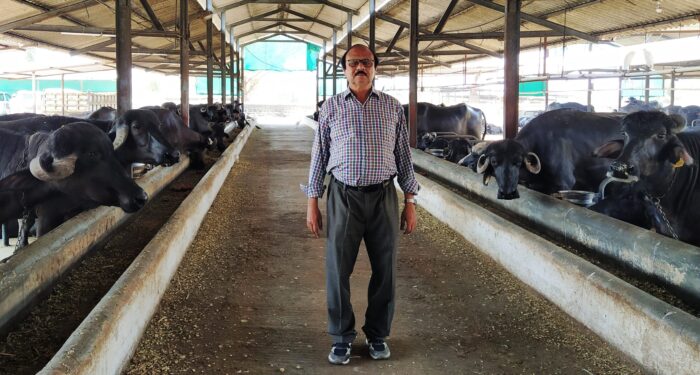
Today at The Think Pot, we get the honour to speak to Dr. Hari Mohan Saxena – a distinguished Indian veterinary immunologist and academician with decades of contribution to animal health sciences. Speaking to Mahima Sharma, on Visionary Voices, the interview reveals how this well-awarded scientist chose risk, purpose and farmers over convention…making an impact where it truly counts.
You have worked across academia, government and international diplomacy (from Guru Angad Dev Veterinary and Animal Sciences University to the Embassy of India in Russia). What moments shaped your core philosophy as a scientist?
Dr. Saxena: When a farmer or animal owner meets a Veterinarian, he/she wants a solution to his problem (like accurate diagnosis or cure of a disease of his animal). He is not interested in how many papers and in which journals the Veterinarian has published. It’s often observed that, within academia, many veterinarians tend to prioritize research publications, as career advancement is closely tied to publishing.
This can sometimes limit the focus on developing and implementing practical, solution-oriented approaches. As a scientist, I took a risk in my career by shifting my focus from paper oriented research to problem centric and solution oriented research to mitigate the sufferings of animal patients. This is my core philosophy in research. It gave me immense satisfaction and fulfilment and I could contribute my wee bit through my knowledge, experience and original ideas in Immunology and infectious diseases.
When you look back at your transition from a researcher in Immunology to leadership roles like Director and Dean at Bihar Animal Sciences University, what was the biggest shift in how you approached impact?
Dr. Saxena: As a Professor and scientist, I observed certain systemic challenges within academic and research environments that at times affected morale, consistency and overall effectiveness among faculty, staff and students. This led me to reflect on how meaningful change can be achieved at a broader level. I came to believe that leadership roles offer a unique opportunity to strengthen systems, uphold standards and positively influence institutional culture.
During my tenure as Director (Resident Instructions) cum Dean, Postgraduate Studies at BASU, Patna, I focused on fostering a culture of fairness, discipline and academic integrity. With the responsibility entrusted to me, I worked towards improving processes, supporting faculty and students and encouraging a collaborative and ethically grounded academic environment.
Your work in diseases like Brucellosis and Hemorrhagic Septicemia has real-world implications. What was the most challenging breakthrough you worked on and what did it demand from you personally?
Dr. Saxena: The most challenging breakthrough was my pioneering work on Brucellosis diagnosis and therapy. Brucellosis is the second most important zoonotic disease in the world. In India alone it causes economic losses worth Rs. 20,000 Crores annually. Once the animal is infected, it remains a carrier and keeps spreading disease to other animals in the farm for the rest of its life. No cure is available globally and the available antibiotics are ineffective. The vaccine being used in India has not been able to control the disease and its incidence is increasing at an alarming rate in most farms taking a heavy toll on farm economics.
To find a cure to this dreadful disease and devise means to convincingly prove its efficacy was the most challenging task. I pioneered bacteriophage based therapies to cure brucellosis. I also developed a new simple and economic non-invasive method of monitoring and assessment of new antibacterial therapies which could be a game changer in the fight against the impending pandemic of antimicrobial resistance. It could help in faster and cost effective development of new therapies.
I was able to advance this work by building on my research in Immunology and Microbiology, supported by sustained effort and commitment. This progress was made within existing resource constraints and I am grateful for the contributions of my dedicated and hardworking students, whose efforts were integral to the results. Together, we have developed and patented a novel immunodiagnostic tool, the Superagglutination Test, for accurate field diagnosis of Brucellosis. In addition, we have developed a new marker vaccine along with a DIVA assay for Hemorrhagic Septicemia, which holds potential for improving control strategies for this significant infectious disease in bovines.
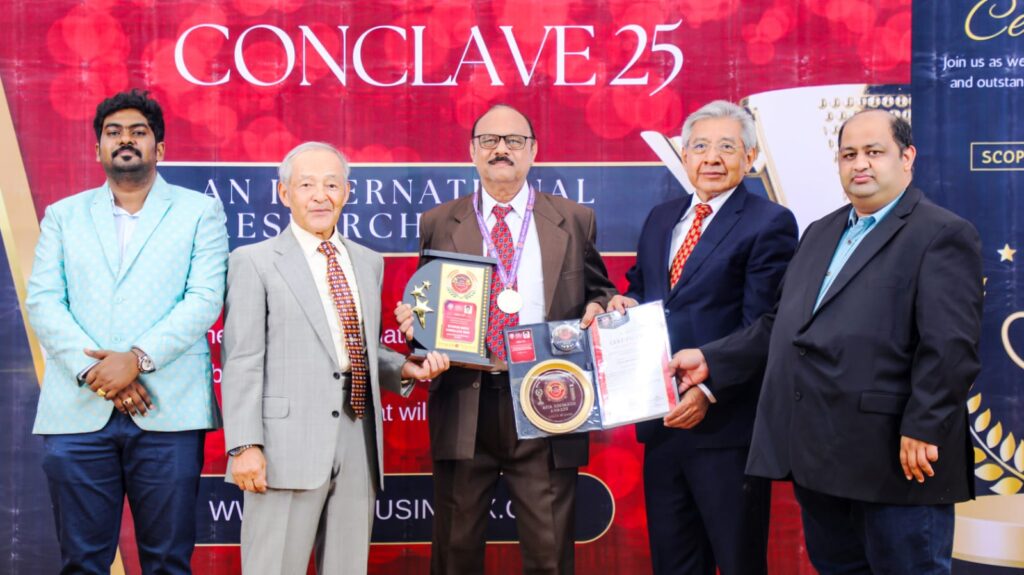
Having represented India in science and technology roles internationally, how did your time in Russia change your perspective on India’s strengths and gaps in animal health research?
Dr. Saxena: My diplomatic assignment in Russia was an excellent learning opportunity for me in international science diplomacy which is very rare for a Veterinarian. I had to deal with bilateral cooperation in all areas of science and technology between India and Russia.
I also had an additional charge to look after Indian cooperation in S&T with Ukraine and Belarus. This gave me an opportunity to learn about recent progress and current status in different areas in science and technology in these three countries.
In addition, I also came to know more about India’s strengths and gaps in vital areas in science and technology as diverse as space science, defence technologies, nuclear energy and Oceanology on one hand and animal health, biotechnology and medical science on the other. I assimilated useful attributes from these diverse subjects for my preparation for future research and administrative roles.
Across decades of research, patents and policy involvement, which contribution are you most proud of, not just academically, but in terms of real impact on farmers and livestock?
Dr. Saxena: I am humbled and content with my original research contributions in Immunology, both basic and applied research in different areas of Immunology. These include innovations in immunodiagnosis and bacteriophage based therapies of Brucellosis, Pathogen specific biomarker based non invasive monitoring and assessment of new antibacterial therapies, phage based diagnosis of bacterial diseases, new method for abrogation of host versus graft and graft versus host reactions in transplantation and delayed type hypersensitivity and novel concepts in immunoregulation for immunotherapy of cancer and COVID.
Looking back, were there any failures or setbacks that, in hindsight, became turning points in your career?
Dr. Saxena: Scarcity of resources and funds for research led me to find simple and cost effective solutions for diagnosis and therapy of infectious diseases. Lack of highly skilled manpower led me to devise simple and easier methods and field applicable diagnostic tests for infectious diseases instead of sophisticated, skill intensive and expensive tests.
Future of Animal Husbandry in India
India has one of the largest livestock populations in the world, yet productivity per animal remains low. What structural changes do you believe are urgently needed?
Dr. Saxena: Sex Sorted Semen, In vitro Fertilization and Embryo Transfer Technique should be applied on a large scale throughout the country to multiply superior germplasm of high yielding cattle and buffalo. Vaccination campaigns should be strictly followed to prevent infectious diseases like FMD and HS. Better awareness on balanced nutrition for livestock should be created through vigorous campaigns. AI and IoT should be applied on a large scale on big farms and government institutions for efficiency. More funding for innovative research in Veterinary and animal sciences should be provided to researchers.
Infectious diseases in livestock still pose economic and public health risks. How do you see advancements in immunology and diagnostics transforming disease control in the next decade?
Dr. Saxena: Molecular Biology, Immunology and Biotechnology have a big role to play in control of infectious diseases through accurate and affordable diagnostics, new and effective vaccines and vaccination strategies, innovative immunotherapies and bacteriophage therapy. Alternative therapies like Ayurveda and Homeopathy should be promoted and supported in Veterinary practice to mitigate antimicrobial resistance.
With zoonotic diseases becoming a global concern, how prepared is India’s animal husbandry ecosystem to handle future outbreaks?
Dr. Saxena: Zoonotic diseases like Rabies, Brucellosis and Tuberculosis are increasing at an alarming rate in India and many other countries. They can also pose a serious threat in the form of bioterrorism and biological weapons e.g., Anthrax, Botulism, Bird flu etc.
Antibiotic resistance among pathogens is likely to reach pandemic proportions. India being a leading country in milk, egg and meat production at global level should be fully prepared for such serious challenges and threats.
Contingency plans to meet such catastrophes and preparedness in the form of stockpiles of vaccines, medicines etc should be given top priority. Although the authorities are aware of such possibilities, the measures should be scaled up befitting the possible enormous impact of such threats on the economy.
Technology, from AI to biotech, is entering agriculture rapidly. Where do you see the biggest opportunity for innovation in animal health and dairy sectors?
Dr. Saxena: AI has an important role to play in farm management, animal disease diagnosis, forecasting, prevention and control. Biotechnology, Molecular Biology and Immunology can aid drug discovery and yield advanced diagnostics, superior vaccines and effective treatment and control strategies for important infectious diseases of animals. CRISPR based important genome editing tools can create disease free animals. Cloning can multiply high yielding cattle and buffaloes. Cell culture based milk and meat production can add another interesting dimension to food security.
Farmers often struggle with access to quality veterinary care at the grassroots level. What policy or system-level interventions could realistically bridge this gap?
Dr. Saxena: Better facilities, increased budget and infrastructure support to field Veterinarians can lead to better Veterinary care and service in villages. An overhaul of the system is required to replace the age-old care delivery system. Latest equipment, improved vaccines and adequate supply of medicines is the need of the hour.
Climate change is already affecting livestock health and productivity. How should India’s animal husbandry policies evolve to stay ahead of this challenge?
Dr. Saxena: Climate change is driven by a wide range of interconnected factors, many of which extend beyond the direct influence of animal husbandry leadership and policy frameworks. Discussions around global warming often include methane emissions from livestock, alongside other significant contributors such as industrial activity, energy use and land-use changes across different regions of the world.
India’s animal husbandry sector is progressively adapting to climate-related challenges, with ongoing efforts to safeguard livestock health, improve productivity and promote sustainable practices. Strengthening these initiatives will require enhanced collaboration among veterinarians, medical professionals, industry stakeholders, economists and policy makers.
A coordinated, multidisciplinary approach, guided by the principles of the One Health concept, can play a crucial role in addressing climate impacts holistically, benefiting animal health, human well-being and environmental sustainability.
If you had the authority to implement three immediate reforms in India’s animal husbandry sector today, what would they be and why?
Dr. Saxena: I would like to implement the following measures:
- Unproductive and stray cattle should be vaccinated and confined to gaushalas to check the further spread of infectious diseases like Brucellosis, Tuberculosis etc.
- Cross breeding, IVF and Embryo Transfer of cattle should be confined to the low producing non descript zebu cattle. The pure stock of indigenous cattle (like Sahiwal, Gir, Rathi, Tharparkar etc) and buffalo (Murrah, Mehsana, Jaffrabadi, Nili Ravi, Surti etc.) should be preserved and multiplied to conserve the indigenous germplasm which is more resistant to infectious diseases and resilient to climate change.
- The breakthroughs which have already been achieved in Veterinary and animal husbandry sectors should be taken to the field level and implemented on a large scale to make the best use of advancements. The government and public institutions should facilitate lab to land transfer of the innovations and advanced knowledge in villages.
About Dr. Hari Mohan Saxena:
A distinguished Indian veterinary immunologist and academician with decades of contribution to animal health sciences. He has served as Professor and Head of Veterinary Microbiology at Guru Angad Dev Veterinary and Animal Sciences University and later as Dean of Shekhawati Veterinary College, Rajasthan. He has also held senior roles including Director (Resident Instructions) at Bihar Animal Sciences University and Counsellor (Science & Technology) at the Indian Embassy in Moscow. A Fellow of multiple national and international scientific bodies, he is recognized for his research in immunology and infectious disease control.
Disclaimer: The opinions expressed in the above interview are the personal opinions of the protagonist/protagonists for which The Think Pot is not liable in any manner. To share your views on an apolitical and intense subject like this you can reach out to us at Our Linkedin Inbox.